One of my favorite things to teach to my pre-meds, PA students, or med students is the difference between disease and illness.
The distinction comes from Arthur Kleinman’s book The Illness Narratives. Kleinman explains that a disease affects one human body and does so in a predictable way – so predictable, in fact, that if we can put together the pattern of symptoms, physical exam findings, and test results, along with a clear biological explanation of how all those things got there, then we can say with confidence that everyone who fits this pattern beyond a certain cut-off has the same disease.
Illness, on the other hand, is one person’s experience of being sick, wrapped up in the context, emotions, and interpersonal connections of that person’s life, or as Kleinman’s colleague Elliot Mishler called it, their Lifeworld. Paradoxically, no two people have the same illness – yet the narrative of a single illness may involve many people.
Or perhaps I should say “beings,” not people. A recent example literally brought home for me the true meaning of an illness narrative.
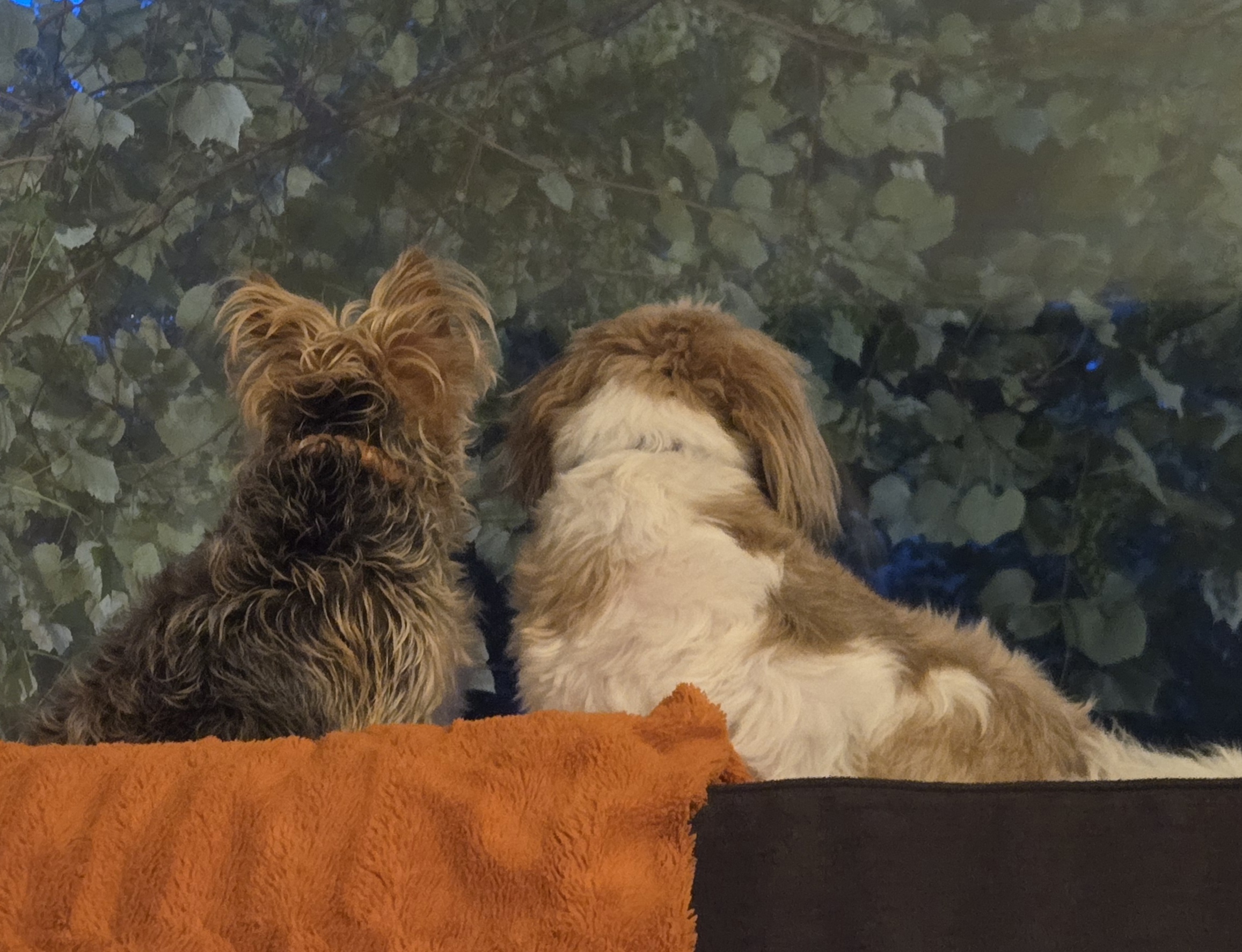
I have two dogs, Harry and Benny. If you read this blog on the regular, you’ve seen a few pictures of them, because when I don’t know what to use for a featured photo a cute doggie picture usually does the trick. Their favorite activity is to lie on the front windowsill and keep watch on the neighborhood. Some neighborhoods have ancient grannies peering through the blinds; mine has two small, lazy dogs nestled between the sofa and the windowpane. They keep the sidewalks of my block safe from such unsavory activities as mail delivery, people taking their babies out in strollers, and worst of all, other dogs exercising.
A fringe benefit of this pastime is that, when I get home from work, two furry faces eagerly await me as I come up the steps – one with a pointy pair of ears showing me he’s been listening for my car to pull up, and the other with his tongue hanging out, because he’s too fluffy and basically always hot. Once I get close enough, the faces disappear to go wait behind the door and bring me a shoe.
Until this spring. In his delusion that he weighs 90 lbs. and can take on any dog in the neighborhood, my 13-lb. little Harry was defending our back fence against the two insolent black labs who dare to bark at him from … their own yard. To prove how big he was, he was jumping high in the air with each bark and must have landed with all his weight on one knee. When he pulled up lame on a walk later that week, we took him to the veterinarian to discover that he had sustained a genuine big dog injury – a torn CCL (like an ACL, but in a dog).
Doctor’s orders after the surgical repair were clear and unforgiving: absolutely no jumping or climbing until he heals. With heavy hearts, we moved the sofa far away from the windowsill and took care not to put any of the other chairs nearby that might have tempted Harry to chance any forbidden doggie parkour. For close to two months, I arrived home in the afternoon to an empty window, and a sad, limping dog. Benny wasn’t much better – he was strictly forbidden to roughhouse with Harry. Every time he raised a paw to swat at him to provoke a good chase we had to move him away. We had entered the no fun zone.
Then came a follow-up appointment with the vet. Harry’s limp was almost gone, he had gained most of the muscle mass back in his thigh, and his range of motion was 90% or better. He had a green light to jump on furniture again. That evening, we pushed the sofa back to its rightful place under the windowsill, and the boys immediately hopped up and curled themselves in opposite corners.
When I arrived home from work the next day, there were the ears, and the tongue, and the fluff where they belonged. My welcoming committee was back.
I don’t mean to trivialize illness narratives by talking about my dogs. First, there is nothing trivial about pets. I will testify under oath that I have patients who lived a decade longer than they would have solely because of their animals. I have other patients whom I have nursed through the worst stages of their lives after their pets died. Dog health and wellness is human health and wellness.
But besides that, think of what we learned here. A seemingly purely physical rupture, easily localized to one structure in one joint, and reparable with a single, thick suture, was actually a catalytic event that disrupted our whole family routine for nearly three months. We altered meals so I could skillfully hide Harry’s medication. Walks had to be shortened, which led to both the other dog and all three humans in the house getting less exercise than we usually do. Benny is still processing the horror of being in the house without Harry for a Whole. Eight. Hours. The day of the surgery. He’ll be writing a trauma narrative about it when he applies to college.
So when a human you care for is ill, remember this narrative. Kleinman would certainly encourage asking everyone, “what does this illness mean to you?” But we can go further. How is this illness affecting those around you – your relatives, your caregivers, your friends? And how is their response affecting you in return? Illness is unique to the individual – but it weaves a web of interactions that happen in community. Prick up your ears and listen to the narrative.
Like what you’re reading? Tune into my podcast, Healing People, Not Patients. You can here every episode on the podcast page of this website.
Healing People, Not Patients is sponsored by Nurp.com — algorithmic trading designed for busy physicians. Nurp is a paid sponsor of the podcast. All trading carries risk and results vary, so do your own research. This isn’t financial advice.
