A few days ago I upgraded my mobile phone. I transferred years of accumulated data and
apps in nearly seamless fashion and can now unlock the thing with my face.
Yet the most amazing thing I witnessed in the process of purchasing this
magical device had nothing to do with technology.
A man in a t-shirt and sunglasses appeared in the doorway of
the store where I was making the exchange and called out to the store
manager. “Hey, you got a minute?” he
yelled to the tall, bearded guy telling me how much I was overpaying for my
service plan. “I need to make this
right.”
The “this” that he needed to make right turned out to be the
loose ends of a heated exchange he had with the manager perhaps an hour
earlier. At some point in that
conversation the fellow with the shades hurled a couple of expletives and the
bearded guy – who responded by tossing him out of the store.
“Take your time,” he said now. “I just gotta make this right. I’ll come back when you’re done.” He was, amazingly, hell-bent on apologizing for
his language, and letting the manager know how sorry he was.
He’s my new hero, because I know how hard that was for him.
If you are a primary care doctor, I advise you to set a life
goal of never needing to be in your practice manager’s office with a patient –
it is a surrogate marker of a complete communication breakdown. But a while back, I found myself in my
practice manager’s office with a person I’d been taking care of for years.
Over the course of three days they had been on the phone
with half-a-dozen people in my practice, from reception staff to medical
assistants to nurses and finally the practice manager, asking for a refill of a
medication in a dose that didn’t match anything on their medication list. In fact, that medication did not even come in
the amount they were asking for. Over
and over my co-workers sent me tasks asking for clarification – and over and
over I repeated what they already knew to be true: I am absolutely certain of
the dose of this medicine, I am not prescribing more than this amount, and I
already sent in a prescription for the previous amount.
When my firm stance didn’t change the patient’s mind, they
went to the practice manager, who got involved to stop them from screaming at
the front office staff. About to enter a
room to see a scheduled patient, I decided to take a detour to the office,
thinking I would stride in, put my doctor foot down, show the person the error
of their ways and extract an apology to the staff, who were feeling abused and
demoralized.
I casually opened the person’s chart, brought up the
medication list and pointed triumphantly at the screen. “See, look right here! It says….”
I trailed off into silence.
An old prescription for two pills
a day of the next to highest dose of the medication, adding up to precisely
what the patient had asked for, stared me in the face. All it said “right here” is that the patient
was right all along and I was in such a hurry to get on with my day I hadn’t
read the record carefully. I even had a
letter on file from the specialist who had recommended this unconventional dose
but was no longer able to prescribe it themselves.
This time I was the one who dropped the unintentional
expeletive. “Oh ****, __________, I’m
sorry. This is my fault. You were right and I trusted my memory
instead of looking more carefully.” I
got the front staff their apology, though – from me.
If you read my work regularly, you know I sit in synagogue
every week waiting for that sudden connection between what we’re reading from
the Torah and what’s going on in my work life.
Primary care medicine is an endless uphill climb, and if there’s one
thing I can grab onto each week then it was worth getting myself to shul that
day. This morning I was struck by one
line in particular:
“When a man or woman commits any wrong toward a fellow
person, thus breaking faith with God, and that person realizes their guilt,
they shall confess the wrong they have done.
They shall make restitution…”
Some context: this portion of the Torah contains difficult
material. It has the very disturbing
trial by ordeal of the adulteress, and the somewhat perplexing rules for taking
a Nazirite vow. But for me, the most
difficult part of the reading is the line I just quoted – not difficult to
understand, but to follow.
Admitting error, and then making restitution for it, is so
hard that there are entire sectors of the economy devoted to avoiding it: risk
management consultants, malpractice defense attorneys, K Street lobbyists. Both practicing medical professionals and the
industries that supply our tools are equally guilty of trying to deny
responsibility and dodge confessing our mistakes. Google Vioxx, or Dalkon Shield, and see what
comes up. Or ask someone who has endured
a missed diagnosis, a medication side effect that was minimized by the
prescriber, or even the blackballing, gaslighting, and harassment that
sometimes follows the application of the label “difficult patient” to someone
who challenges the unthinking routine. We
don’t like having our errors pointed out to us, and we enjoy even less having
to fess up to committing them, and least of all having to fix the damage we did
– so we do whatever we can to get out of it.
I spent part of my afternoon reading the new book Compassionomics, by Cooper University
physicians Stephen Trzeciak and Anthony Mazzarelli. I had been reading the first few chapters
last weekend, patting myself on the back because the research they were
reviewing, demonstrating how indispensable compassionate behavior is to the
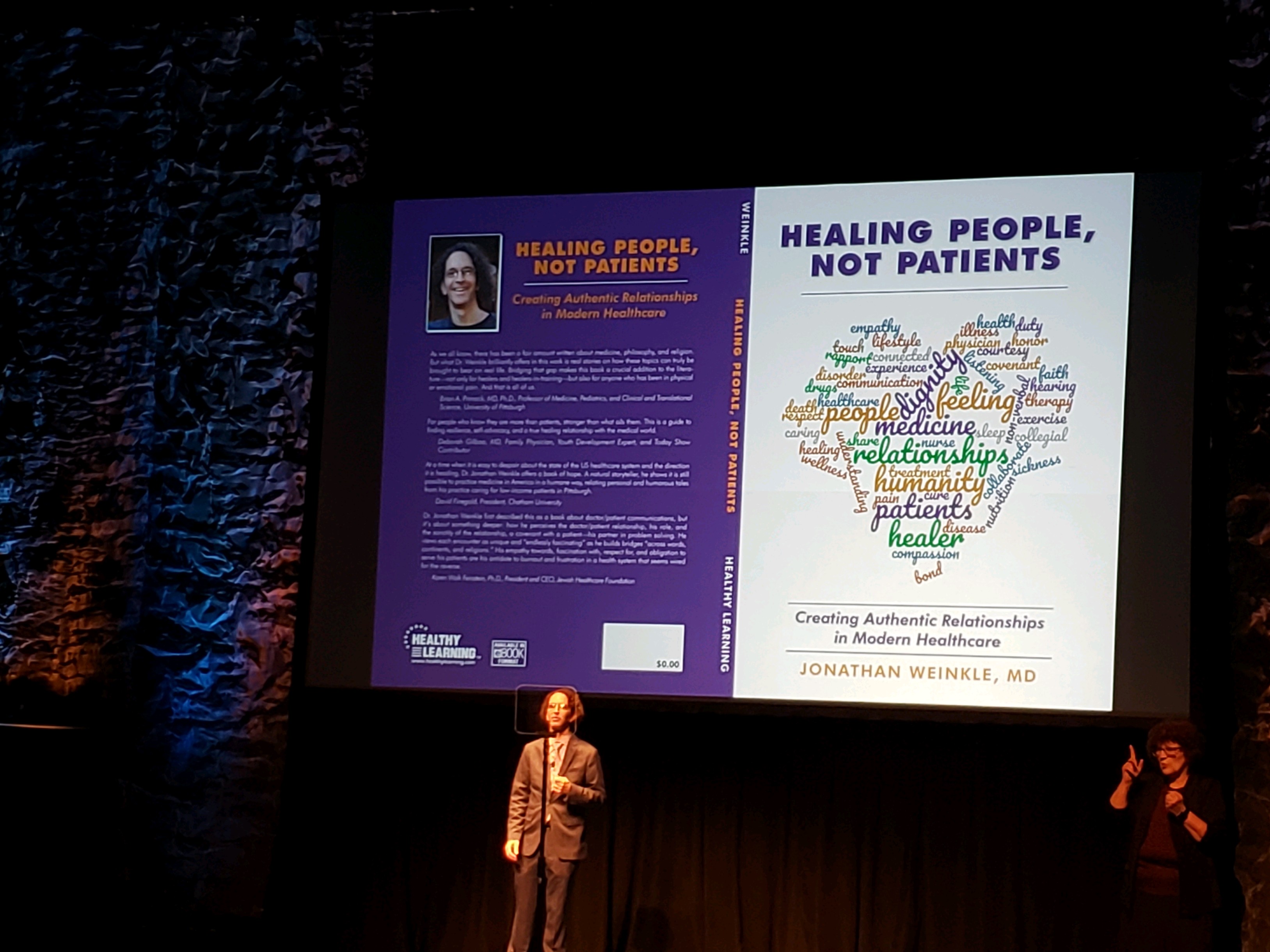
practice of sound medicine, is some of the same research I accessed in writing Healing People, Not Patients, and read
like a validation of everything I stand for.
Today’s reading was way more uncomfortable. Discussing the effects of burnout on medical
residents, Trzeciak and Mazzarelli identify a long list of behaviors that lack
compassion: not fully answering questions, prescribing medication for agitated
patients without going to assess them, or skipping diagnostic tests because
they might delay discharge. I squirmed
on my previously comfy couch; I could recall doing all of those things as a resident, sometimes even down to being
able to picture the nurse, the specific unit of the hospital and the patient’s
face.
Then I turned the page and read the story of Gina, a woman
who asked her cardiologist for a sleeping medicine because of anxiety over an
upcoming, non-heart-related surgery.
When the cardiologist probed deeper, it turned out that Gina had already
asked her PCP, who had waved off the request by telling his staff, “If the
surgery is the reason she can’t sleep, tell her to ask the surgeon to prescribe
it.”
Forget about recalling something I did in residency that I’m not proud of. I’ve done the same thing as that burned out
PCP three or four times this month. And I know as I’m doing it that I could make
more of an effort. Reading the book
today was like having a mirror held up to my actions, like the Biblical prophet
Natan telling King David, “You are that man!”
You, Dr. Weinkle, are that burned-out, uncaring PCP. Do a better job!
Trzeciak and Mazzarelli are making the point that I’ve made
dozens of times: there are behaviors that show, rather than tell a person, “I
care about you and about what happens to you.”
Every time we turf one of those behaviors to a colleague, it lessens
that message of caring (and according to their review of the research, there is
often a dose-response effect – the more times we demonstrate a lack of caring,
the worse our effect on their outcomes!).
Admitting error is one of those behaviors. Admitting an error says, “I did something
that hurt you and I don’t want to hurt you.
I feel sorry for causing you pain and now it is my responsibility to fix
that pain.” Like most broken things that
become stronger in the repair, I have relationships with people I take care of
that are more enduring now because of apologies and restorative gestures than
they were before the mistake was made. And
these don’t need to be malpractice level errors, either. The foul can be as minor as saying I would
look something up and not getting around to it – a kind of mistake I am
currently drowning in, as a chronic over-promiser.
So I need to stop turfing those requests to fill medications
that are “someone else’s problem.” I
need to take the time to hear the problem before prescribing a med, even in the
middle of a busy work day or of a sleepless night. I need to deliver on my promises and not just
make them to sound like I care.
I need to make this right.
Like this:
Like Loading...